
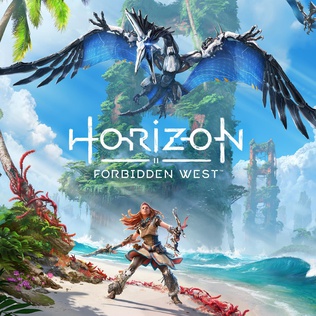
Horizon Forbidden West brought with it another adventure inside Guerilla’s machine-infested, post-apocalyptic world. Boasting around a 30-hour story with a multitude of side missions and errands to complete across the western United States, the game offered a lot to sink my hours of play into. With such a creative premise/world my hopes were high for a second outing in the Horizon series. So how did it all stack up? How did Guerrilla Games handle the story and open-world elements? Did it bring enough improvements to stand above its predecessor, Zero Dawn, and did it justify itself as a worthy sequel?
NARRATIVE
Forbidden West started hot by dropping me right into the shoes of Aloy as she embarked on her new mission to get Earth’s repair back on track. Right away, the game felt bigger than the first. Production value of environments and cutscenes received a boost in visual fidelity and it was a beautiful sight to see the emphasis of detail on both machines and character models alike. The environments were exceptional, with lush forests, vast deserts, and overgrown beaches that all made for a varied world map to explore and fight in. Sound design and music deserve a nod too, with a beautiful soundtrack overlaying the project and heavy-hitting sound effects that played alongside me on my journey. It all came together for an immersive experience that rivaled a lot of open-world games out there.
For characters, the story brought new additions into the fold alongside returning favorites. I have to admit, some of Aloy’s closest friends did not fully capture my attention in Zero Dawn, but here they were quickly given more personality through better dialogue and in-game action. New characters mixed well with the original cast and had their own specific reasons for assisting Aloy on her mission along with their own unique personalities. The plot of Forbidden West had a lot going on, but barring a few exceptions, the characters involved in these conflicts were strong and made for a great supporting cast.
The problem is that the story tried to do too much. Multiple storylines were woven together and Guerrilla tried to make it work, but even with its 30-hour story, the plots and their characters were weaker because of the limited time I got with them. There is a great villain introduced early on in the game and I was bought into the conflict that was brewing but quickly another one began and soon it became this issue of being involved in one storyline one mission, then it would get put on hold for the other. It killed the pacing and made me less invested since story beats weren’t entirely connected. When a climax moment would happen it didn’t feel like I had seen enough to be emotionally invested and even the moment itself didn’t feel earned no matter how grand it was.
Aside from the main plot, there were plenty of side missions and sometimes these were as strong, if not stronger than the main missions. Side missions characters were unique both in their models and their small struggles that helped flesh out the world. It was a breath of fresh air to do side activities that didn’t feel lazy and tacked on for the sake of having things for the player to do.
GAMEPLAY
Horizon Zero Dawn’s gameplay was a standout system for me when it was released, and with Forbidden West, it is no different. The core experience of fighting machines using ranged combat was great and took some time to re-master; both in aiming and strategizing the most efficient way to whittle down the mechanical beasts. Pinpointing weak spots and using the bow and arrow to break off machine components felt rewarding, and venturing into the wilds to search for specific machines to secure resources I needed to craft items made becoming a good hunter worth the time invested. All of this never became stale either, with the inclusion of new special abilities related to a wide array of skill trees, the combat overall felt more diverse than the original.
Speaking more on the skill trees, there was a lot to gain by leveling up, completing main and side missions, and errands. Each time I completed anything I was rewarded with skill points to spend on one of the six trees, each tree being specific to making that part of Aloy’s kit more powerful. For example, the hunting tree boosted ranged combat, while the warrior tree boosted melee combat. Included in these skill trees were new special moves. One ability improved the damage of my arrows for a specific number of shots while another was an over-shield that helped me sustain more damage in combat. There was much more to see than what I said, and the amount of depth in the trees made me want to continue playing to try out all the different abilities the game has to offer.
Now, the bad part of the gameplay came from things that were all fixable and not necessary to the core experience. The first was the climbing sections. This type of thing has been around in single-player games for a long time now. In truth, it has its place in this game since I am playing on a lesser developed Earth and these characters have spent their lives learning to ascend cliff-sides and mountains. My problem is not when this kind of idea is used appropriately, it’s when it challenges the identity of a game.
There were areas in this game, same as the first, where you descend to where the machines are created. In these areas, you work your way to an eventual boss fight but this is where the climbing got out of hand. It turned the game into a borderline platformer, and to me, that is something Horizon should never feel like. Whole sections with timed jumps and grappling hooks were boring, and with the controls, bugs, and glitches being the way that they were, these sections were also frustrating and awkward to get through. It’s clear it’s an attempt to slow down the pace, but it feels out of place. As another example, when I entered a room and had to get across to the next door and it took me 20 minutes to get to the other side in the most convoluted way, it felt like a pointless game lengthener that could have just been deleted altogether.
The next thing was the hand-holding and overused dialogue tips in-game. With Elden Ring being a hot topic at the moment, Forbidden West has received a lot of flak for “babying the player”. While I agree it does help sometimes for characters to talk in-game for tips, it becomes overbearing when I am in a fight and don’t have the resources to fight the machine the way the game wants me to, so now a character keeps telling me what type of ammo to use over and over. It was annoying, and this combined with audible reminders by Aloy to go do a task that was just explained to me by another character and put in text on my screen ends up feeling like overkill. It broke my immersion at times and made me feel the developers thought I as the player, was stupid. Again these were all little issues, but they hindered parts of the game.
WRAP-UP
One thing I wanted to stress in this review, with this game, in particular, was the machine hunting and beauty of the world. The amount of work and detail put into the world design and the models of these machines are insane and Guerrilla deserves to be recognized for the breathtaking landscapes and visual effects I saw. The process of hunting the machines within the variety of biomes the open-world offered was something I found unique and special. When I took on the biggest and baddest machines, it gave me a feeling I don’t get in most games these days and that is a testament to the setting and gameplay ideas Guerrilla has created.
Horizon Forbidden West did a lot of things a good sequel should do. It brought more content to the table and introduced new ways to play without completely changing the core experience. While there are issues with an overstuffed narrative, it moved the story forward and posed interesting plot threads and characters. Gameplay was a step up from the original, and with great presentation and amped-up combat with new machines and skills, it’s a game that’s worth playing through and past the main story. Lengthy climbing sections and a bit too much handholding did become a bother, but the game still came out as an intense and fun experience to play through. I hope to see more work from Guerrilla Games in the future, hopefully with a conclusion to this memorable original series.
Score: 7.8/10
 gamegrounds.blog