
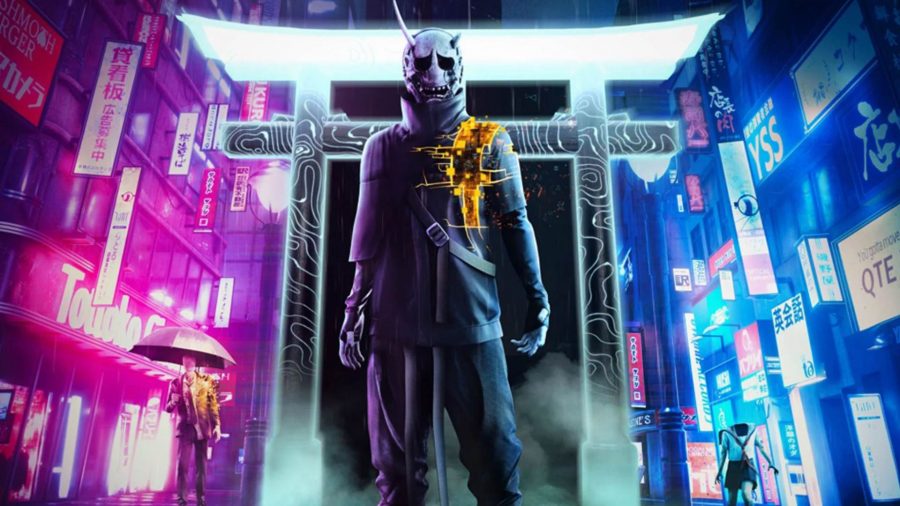
A paranormal open world based in the city of Tokyo immediately sounds unique on paper. Add in the supernatural combat with an intriguing representation of Japanese culture and Ghostwire: Tokyo looked to be a special title in a sea of formulaic releases. Tango Gameworks went off in their own direction with their new IP and created something personal to share with audiences. The game brought fun ideas and visuals to the table, but with every positive along the way, there was something holding the project back. From the story to core gameplay, issues bled through that kept me from consistently jumping back in.
NARRATIVE
The game’s story kicked off by throwing me into the shoes of a Tokyo citizen, Akito. A spirit by the name of K.K. has possessed Akito and grants him access to supernatural powers after all of Tokyo’s population has disappeared. The story of the game has the player hunting down the main villain with K.K. after he kidnaps Akito’s sister for a “ritual” he is planning. You fight your way through the barren city battling evil spirits and gaining access to new abilities as you close the gap between you and the story’s villain. The story has its moments, but for the most part, it comes off as predictable. I don’t want to flat out say it was bad because the inclusion of all the Japanese culture and folklore makes for a different, refreshing, and interesting game to experience, but issues arise when the story’s messages and themes fall into trodden territory.
From the early moments, it was easy to see where the story was headed and it felt like there was a much more interesting story within K.K.’s character than Akito. Some side characters are linked to K.K’s backstory and in cutscenes, Akito sometimes ends up standing there while a surface of a better story begins to play out until Akito’s goal of finding his sister takes center stage again, and we never get that deeper look into what may have been a better story.
One positive I do want to point out is that the game had a good villain. As pieces of his character were revealed I began to empathize with him to a degree and saw things from his point of view. It is always a plus when a story can make you resonate with a villain and here it worked for me.
GAMEPLAY
Ghostwire: Tokyo brought with it the city of Tokyo in the form of an open world and presented it in great fashion. The blend of traditional cultural elements and modern-day additions to the city is something unique to Tokyo and it was cool to see all that implemented. With the sudden disappearance of the population, there are these areas that show where people were at the time they disappeared and what they were doing, which helped ground the severity and eerieness of the situation at hand.
While the city aesthetic is great, the open world, unfortunately, ended up feeling empty. Of course, the population is gone, but walking through the streets just felt lifeless even with missions and enemies populating parts of the city. There are side missions to complete but of the ones I completed, they were either slow tailing missions, a simple fetch quest, or something that boiled down to fighting a group of enemies. While there were standouts in the side missions, there wasn’t enough to them to make completing them feel worth the time. The content overall did not feel like the unique game this title presents itself to be and lacked personality and engagement since there weren’t any real side characters to meet since the spirits you activate the missions with are generic souls.
Around all these elements we have the combat and progression. K.K.’s ethereal weaving is the main offensive and defensive component at Akito’s disposal. These supernatural abilities let Akito use different elements such as fire, water, and wind to fight back the evil spirits in the game world. The visuals were great as I sent elemental projectiles at the enemies until their core was revealed. When the core was exposed I was prompted to pull the core out which destroyed the spirit immediately. The inclusion of a bow and arrow does help to mix things up and so do the talismans’ which brought some different avenues to combat, but both of these ideas didn’t help much to improve the combat system. All in all, the combat is flashy and fun, but after a while it became repetitive. While different elements offer some change-ups, it all boils down to hitting the spirits with a normal or charged attack with whatever “ammo” you have until the core can be grabbed. The combat never went deeper than what was initially offered and that is also the same issue with skill trees.
Skill trees helped boost combat and traversal methods, but like I said there is not much to see beyond the first upgrade. While there are unique upgrades that help you with one-shotting enemies or making the area of effect/damage bigger and better, many of the upgrades simply boosted the speed of a charged shot or the speed of casting a normal attack. There were not many new things to discover and I think it is a bummer that there weren’t more surprises with a combat premise that is fully submerged in the supernatural and paranormal. I am not saying the combat is bad and the gameplay is not fun, but it got tired quickly.
WRAP-UP
Ghostwire: Tokyo was a game I was looking forward to through all its promotion. The setting, combat, and visuals, all got me excited for something that seemed a bit “out of the box”. While great ideas are here and all come out the gate strong, the story falls into treaded tropes, and the gameplay never cracked the surface of how far it could have gone. Ethereal weaving, evil Japanese spirits, and folklore were interesting routes to take and the cultural elements were great to see, but the game struggled with a lack of depth in its core sections.
Score: 6.8/10
 gamegrounds.blog